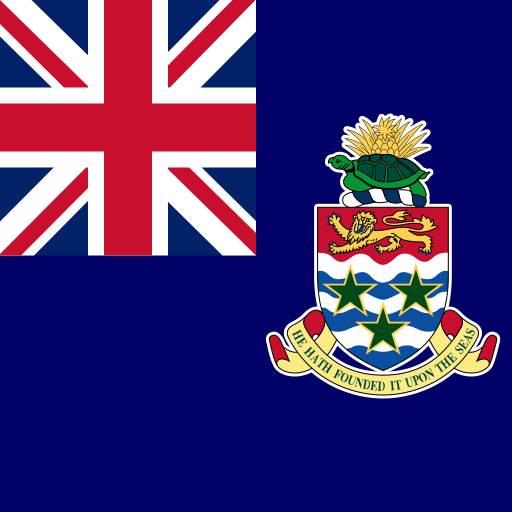
Getting paid from Cayman Islands
The Cayman Islands is not on Stripe's list of supported countries, and Shopify Payments does not list it either. PayPal does list the islands, and accounts here can receive PayPal Payouts in US dollars. Those payouts have no automatic currency conversion, so you withdraw the balance to your bank and deal with the currency there. That helps when a platform pays you, but it is not a card checkout for your own store.
With a US LLC, its EIN and a US business bank account, you can apply for a US Stripe account and for Shopify Payments as a US business. Each provider reviews the business, the website and the owner, and makes its own decision.
At home
No income tax, but not a tax-free LLC
The Cayman Islands has no individual income tax, no corporate income tax, and no withholding tax on dividends, interest or royalties. There are no controlled foreign company rules and no foreign exchange controls. Profit from the LLC and distributions to you are therefore generally not taxed in the Cayman Islands.
That does not make the LLC free of tax elsewhere. Whether US tax is due depends on where and how the work is done, and the LLC keeps its US filings. If you are a citizen or tax resident of another country, that country may tax you on the LLC's income even while you live here. The IRS lists no income tax treaty with the Cayman Islands, so there is no US treaty relief to rely on, and the islands' double taxation arrangement with the UK does not change that. The islands also apply FATCA, which reports financial accounts held by US persons to the IRS, and the Common Reporting Standard, which shares account information automatically with other jurisdictions.
Licences if you do business here
Anyone carrying on a trade or business in the Cayman Islands generally needs a Trade and Business Licence for each type of business and each location, and that covers activity carried on online or only occasionally. A company carrying on business here also needs a Local Companies (Control) Licence, unless at least 60% of its shares are beneficially owned by Caymanians and at least 60% of its directors are Caymanians, or another exception applies. The licensing board is generally reluctant to accept a private home as a place of business.
The Local Companies (Control) Act excludes some activity from carrying on business in the islands, including carrying on business outside the islands from a principal place of business here. Whether your LLC fits that exception is a legal question, and a Trade and Business Licence may still be needed for business run from within the islands. A foreign company that registers in the Cayman Islands can also fall under the economic substance rules if it carries on a relevant activity, such as holding company, intellectual property or distribution and service center business.
Work permits and bringing money home
If you live here on a work permit, check this first. Under the Immigration (Transition) Act, engaging in gainful occupation without authorisation is an offence, and so is failing to comply with a work permit condition. Whether running your own LLC from the islands counts as gainful occupation under your status is a question to settle with a lawyer before you start.
Distributions from the LLC arrive as an incoming international transfer. There are no exchange controls on bringing it in, and your bank handles any conversion to Cayman dollars. Keep a record of every transfer between you and the company and what it was for, together with the LLC's books.
The US side is the same for everyone
Where you live does not change the US part. It is done online, without travelling, without a US address and without an SSN.
- Choose a state: Wyoming or New Mexico for low running costs, Delaware if you plan to raise money from investors.
- The formation document is filed with a registered agent in that state, within 48 hours.
- The EIN is requested from the IRS as soon as the state approves. No SSN or ITIN is needed.
- You get the operating agreement that banks and payment providers ask for.
- With those documents you apply for a US business bank account, for example at Mercury.
- Every year: the registered agent, the state's annual report where there is one, and Form 5472 for a single-member LLC owned by a foreign person.
Mercury asks founders from some countries extra compliance questions, and it does not open accounts for people who live in a number of countries. If Mercury cannot take you on, we help you with one of our other bank partners. Mercury's list of countries.
Which state?
With no people or premises in the US you can choose any state. Most founders abroad choose on yearly cost and speed.
Sources checked on November 23, 2026
- Stripe: global availability
- Shopify Payments: supported countries
- PayPal: countries and supported features for Payouts
- IRS: United States income tax treaties A to Z
- Deloitte: Cayman Islands Highlights 2026
- Mourant: carrying on business in the Cayman Islands
- Conyers: Cayman Islands local companies
- Radio Cayman: notice on penalties under the Immigration (Transition) Act
- Cayman Finance: the fixed Cayman dollar exchange rate
- GOV.UK: UK and Cayman Islands double taxation arrangement
- Department for International Tax Cooperation: FATCA
- Department for International Tax Cooperation: Common Reporting Standard
This page is general information, not legal or tax advice. Rules and fees change; check your own situation with a lawyer or accountant in Cayman Islands before you form the LLC.
startyour.llc is a private company, not a government agency, and is not affiliated with any US state or government office. We are not a law firm and do not give legal or tax advice.